For more than three decades, Dina Iskander has designed beautifully elaborate weddings, private
celebrations and large-scale commercial events across Egypt and the region with remarkable flair. Many of her projects are distinguished by the ways in which they draw from the character of their surroundings. When working within historic spaces, she treats the space as the starting point for her work, looking at its architecture, visual language, motifs, materials, and historic context to inform the event’s guiding concept and scenography. Working within the context of historic spaces requires a particular sensitivity, since they already come with their own complex histories and narratives. The challenge for Iskander is knowing what to add, what to borrow, and what to leave alone, while ensuring that the event remains in dialogue with the setting’s character.
“My research for an event always starts with the space,” she says. “We have to respect the architecture of the space, and identify the event itself with where it’s positioned.”
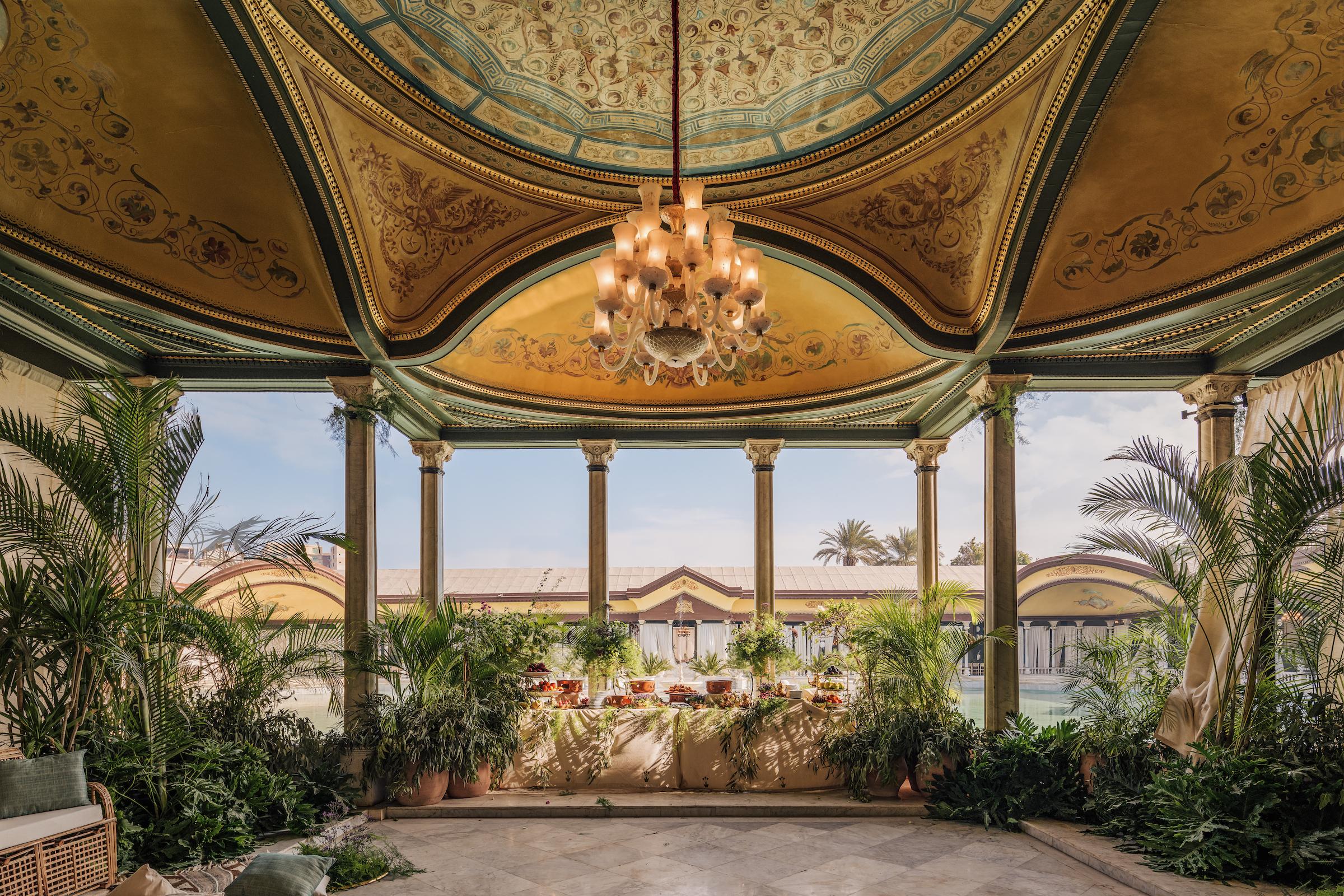
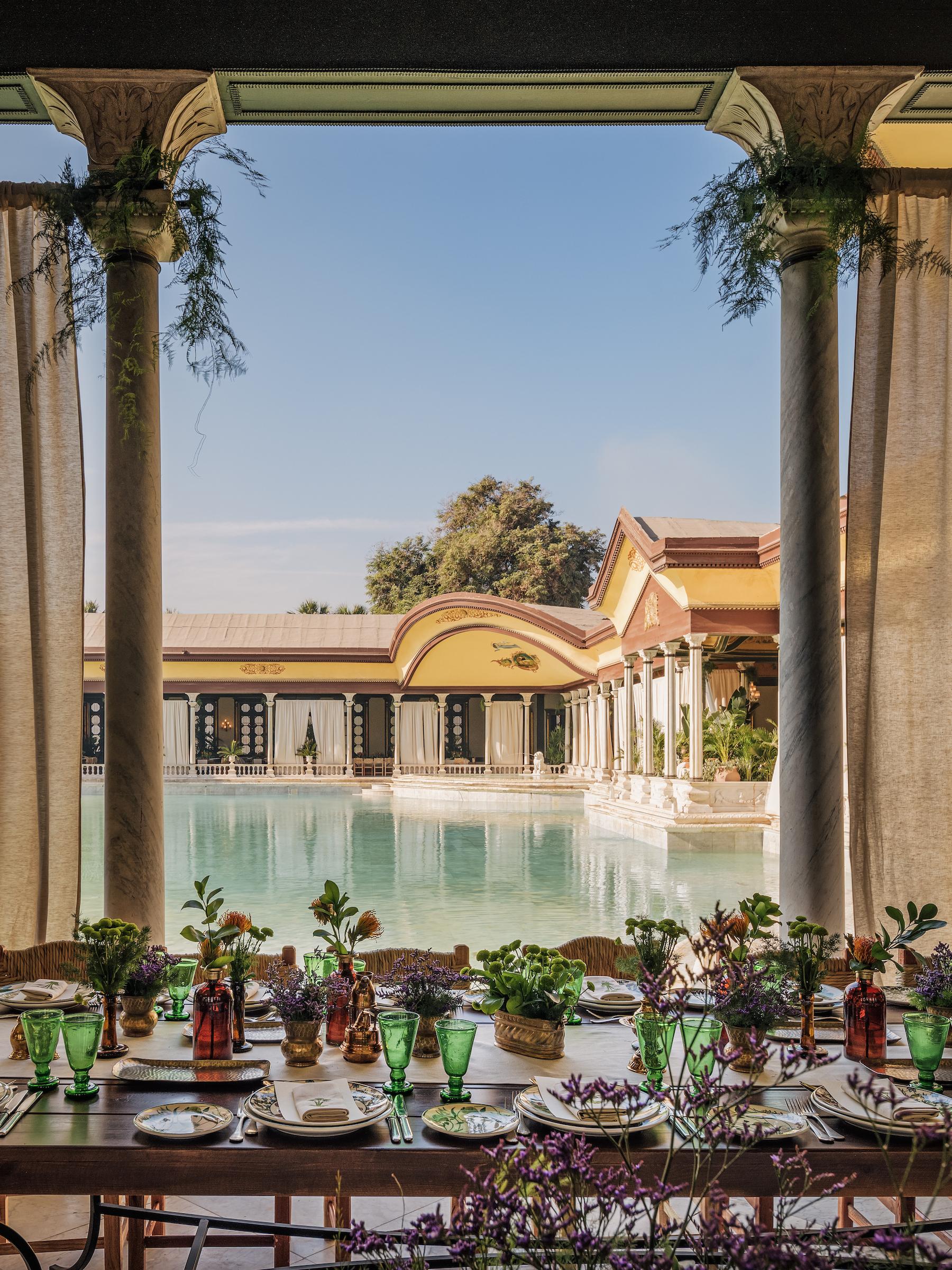
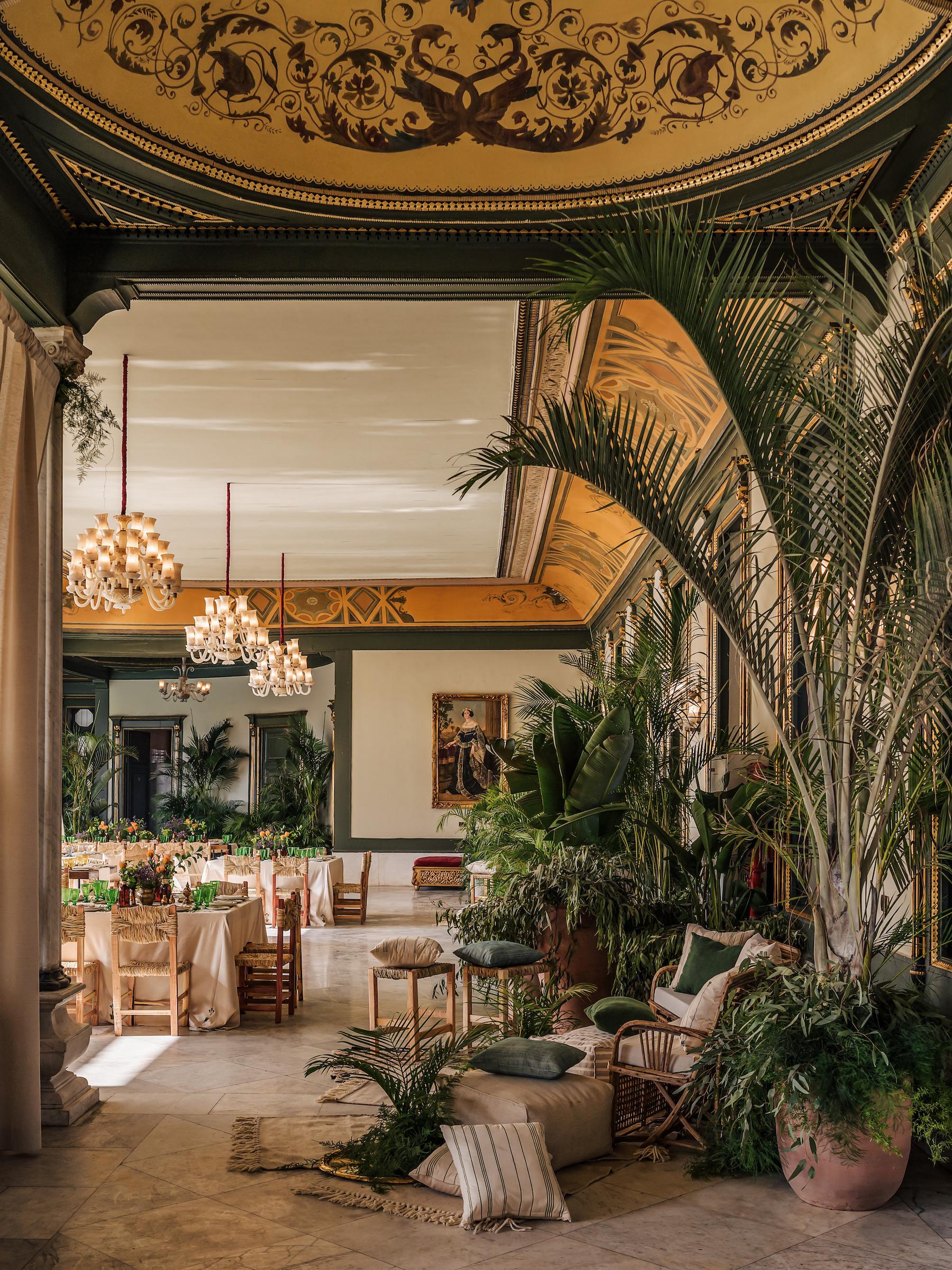
Iskander’s creative approach materializes in a lunch developed for Dior in 2022 at the historic Muhammed Aly Palace in Shubra, which she proposed after exploring several relevant cultural venues. Built between 1808 and 1821 by Muhammad Aly Pasha, the palace was an early expression of the ruler’s ambition to introduce new architectural and cultural influences into 19th-century Cairo.
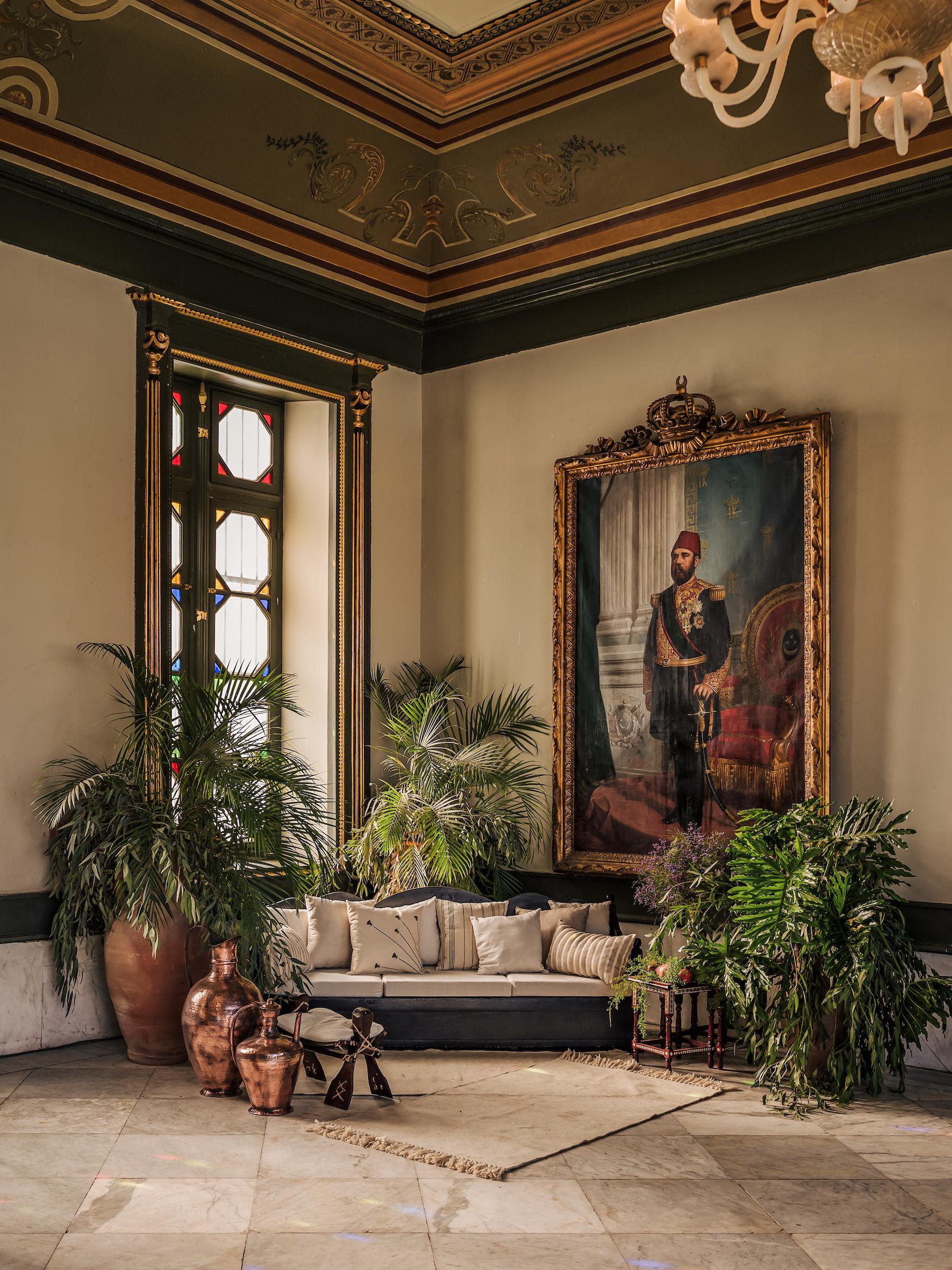
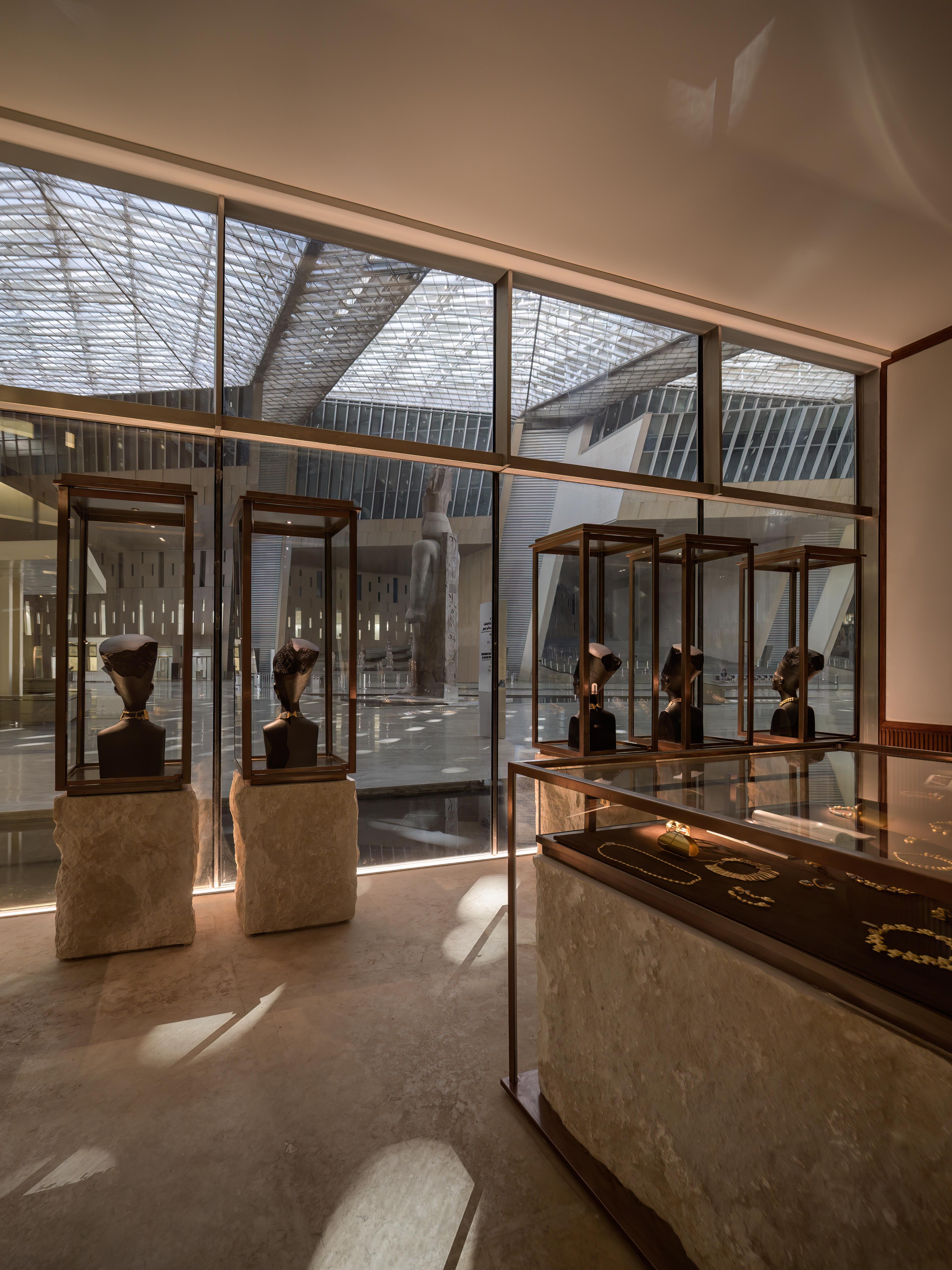
Its architecture combines European aesthetics with Islamic motifs, set within an expansive garden complex. For Dior, the space’s exclusivity, setting and practical accessibility made it the right fit for a tightly scheduled program which also included a presentation at the Grand Egyptian Museum and a runway show at the pyramids.
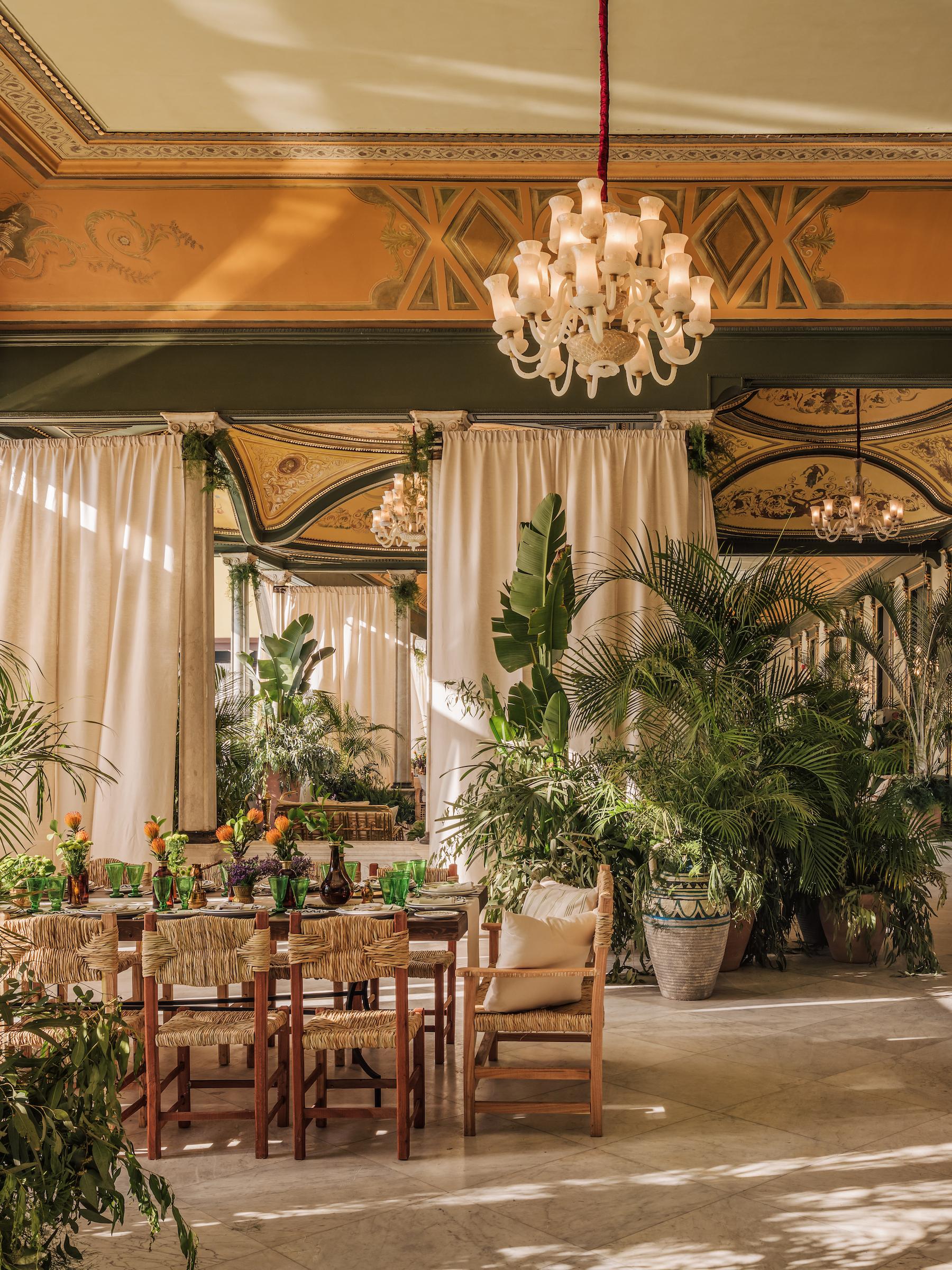
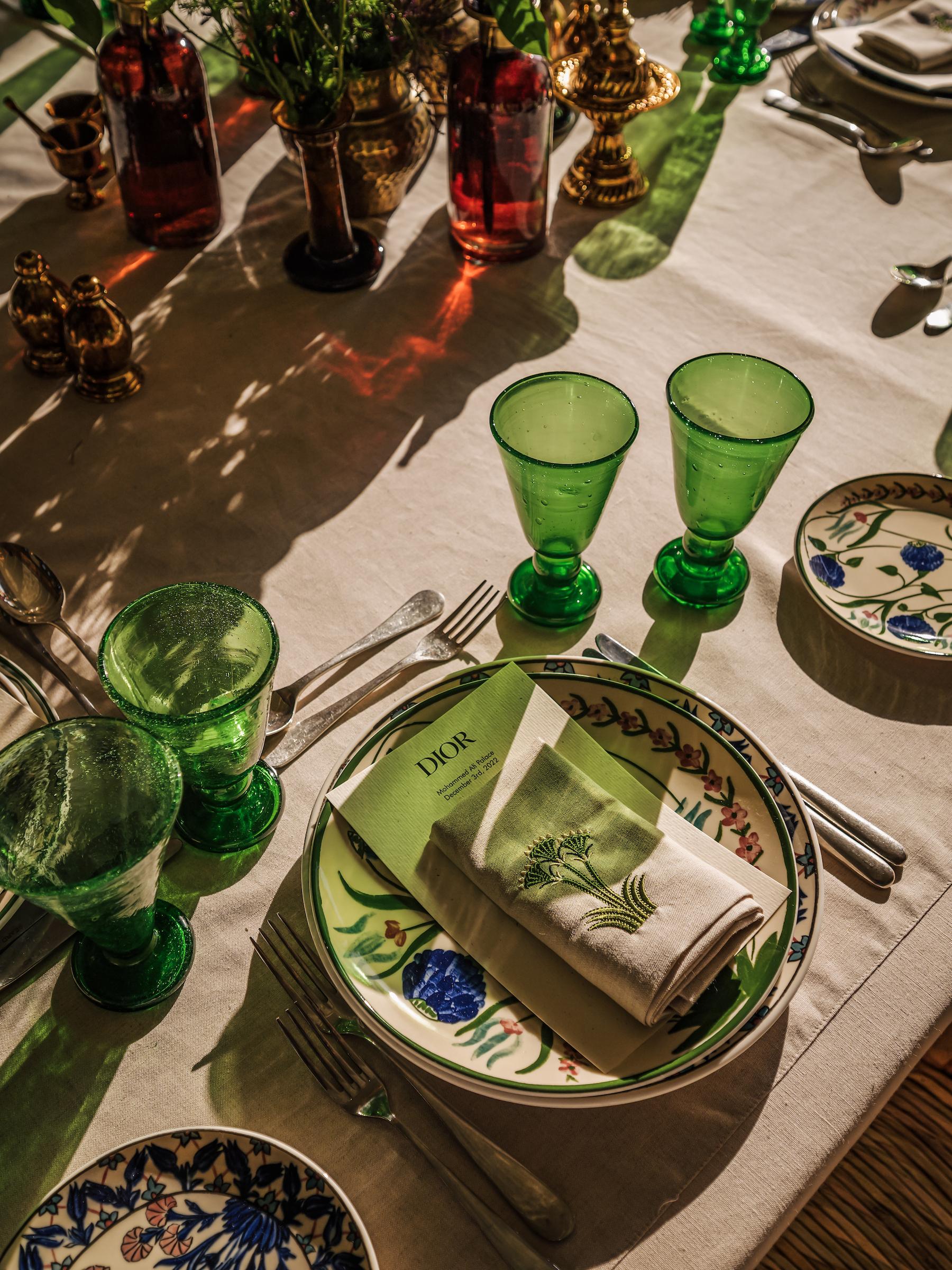
The brief was distinctly local and artisan. Iskander’s team looked towards Egyptian arabesque, rattan,elaborate greenery, and a compilation of visual cues from the palace itself.
The decorative motifs and ornaments of the palace’s walls and ceilings informed custom-made dinnerware and other designed elements; blown glass cups, handwoven chairs, and embroidered napkins brought Egyptian craftsmanship in dialogue with the setting within the 400-person lunch. In keeping with Iskander’s practice, even the most minute details were considered as part of the experience, including staff uniforms and entertainment costumes, which were also designed and produced locally.
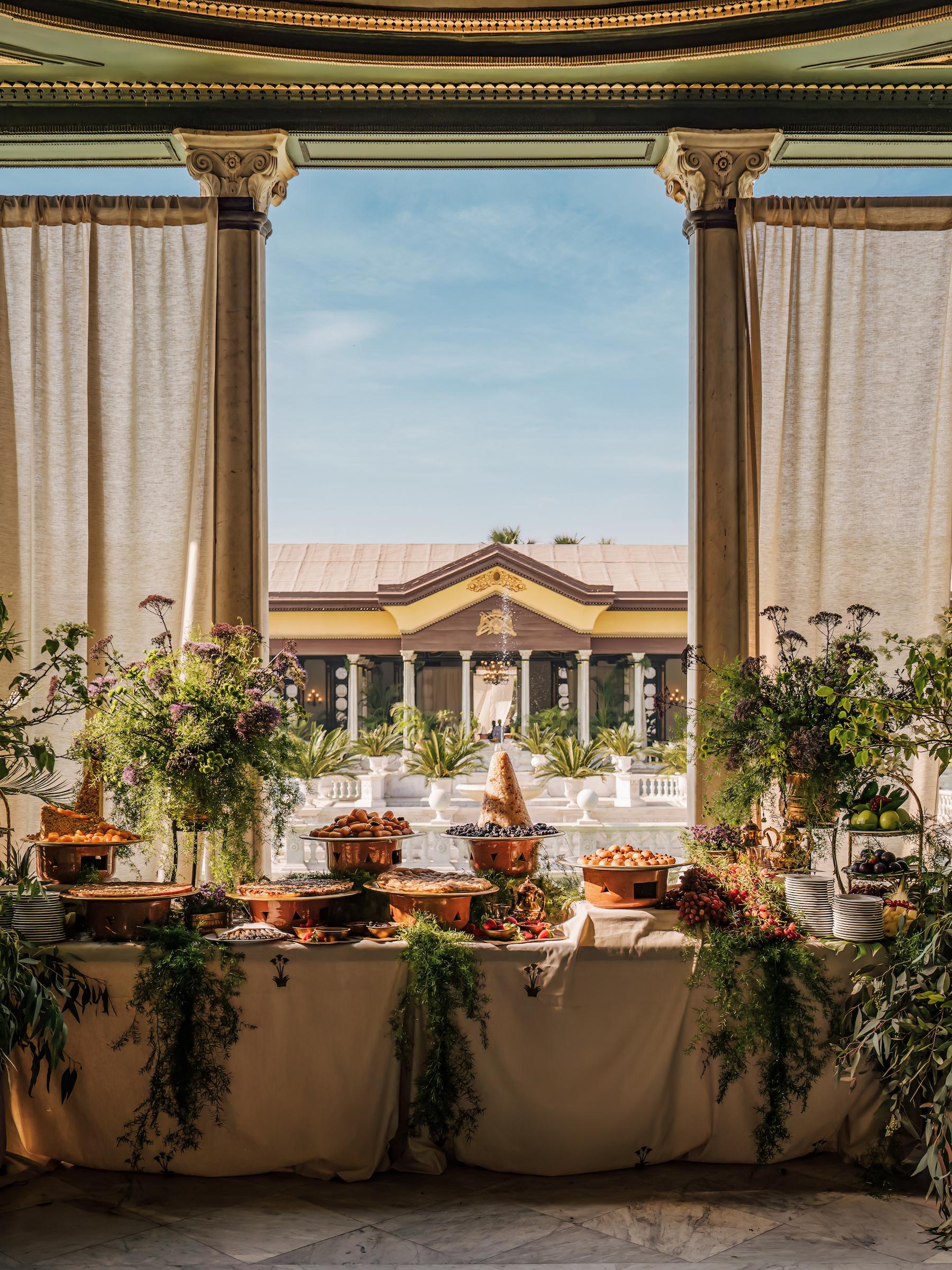
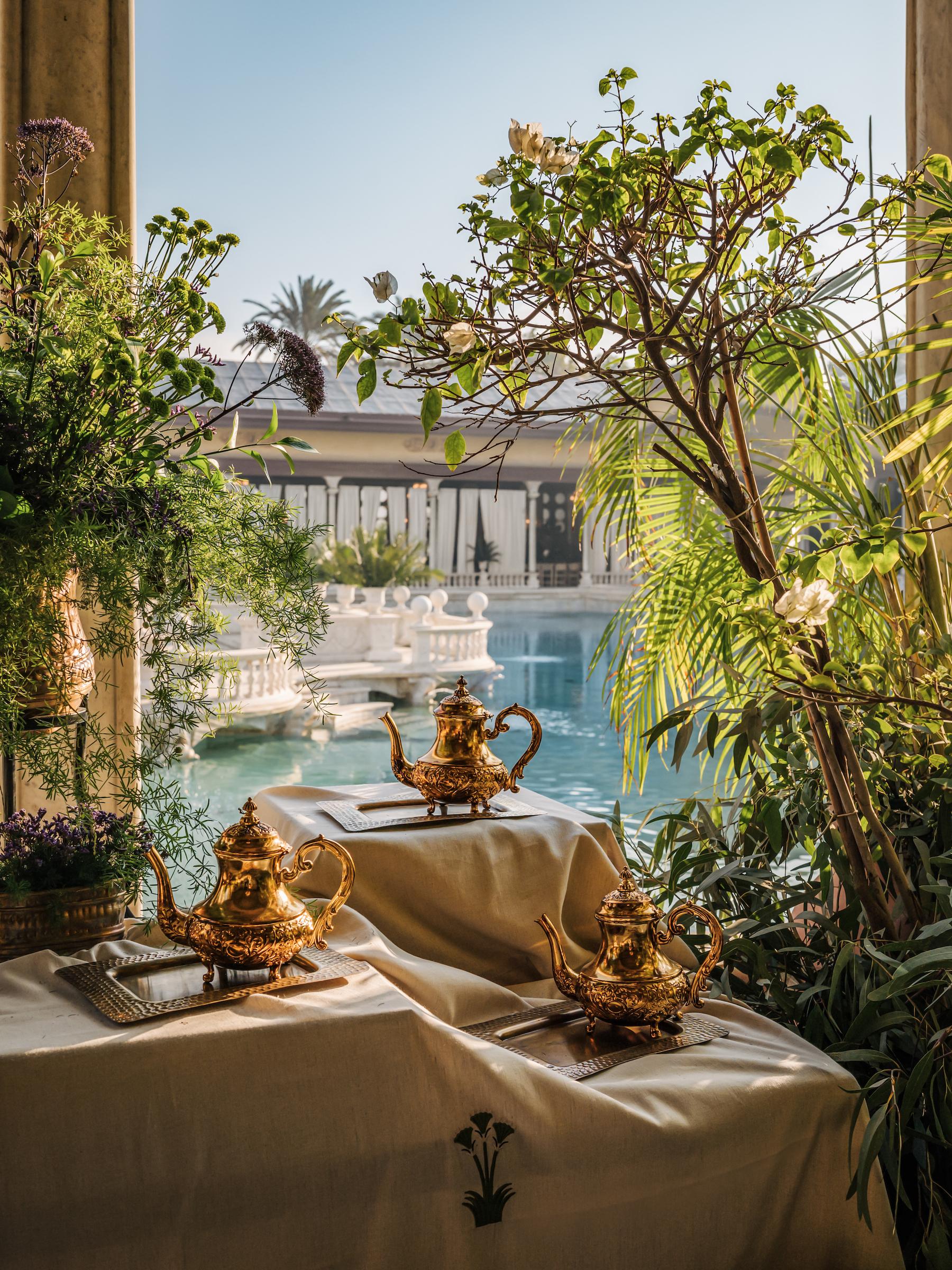
The result was an array of traditional references with a contemporary sensibility. Commercial branding remained deliberately minimal, allowing the palace itself to retain visual dominance. A curated botanical arrangement echoed the naturalistic qualities of the building, and the lunch’s color palette was designed to sit seamlessly within the space.
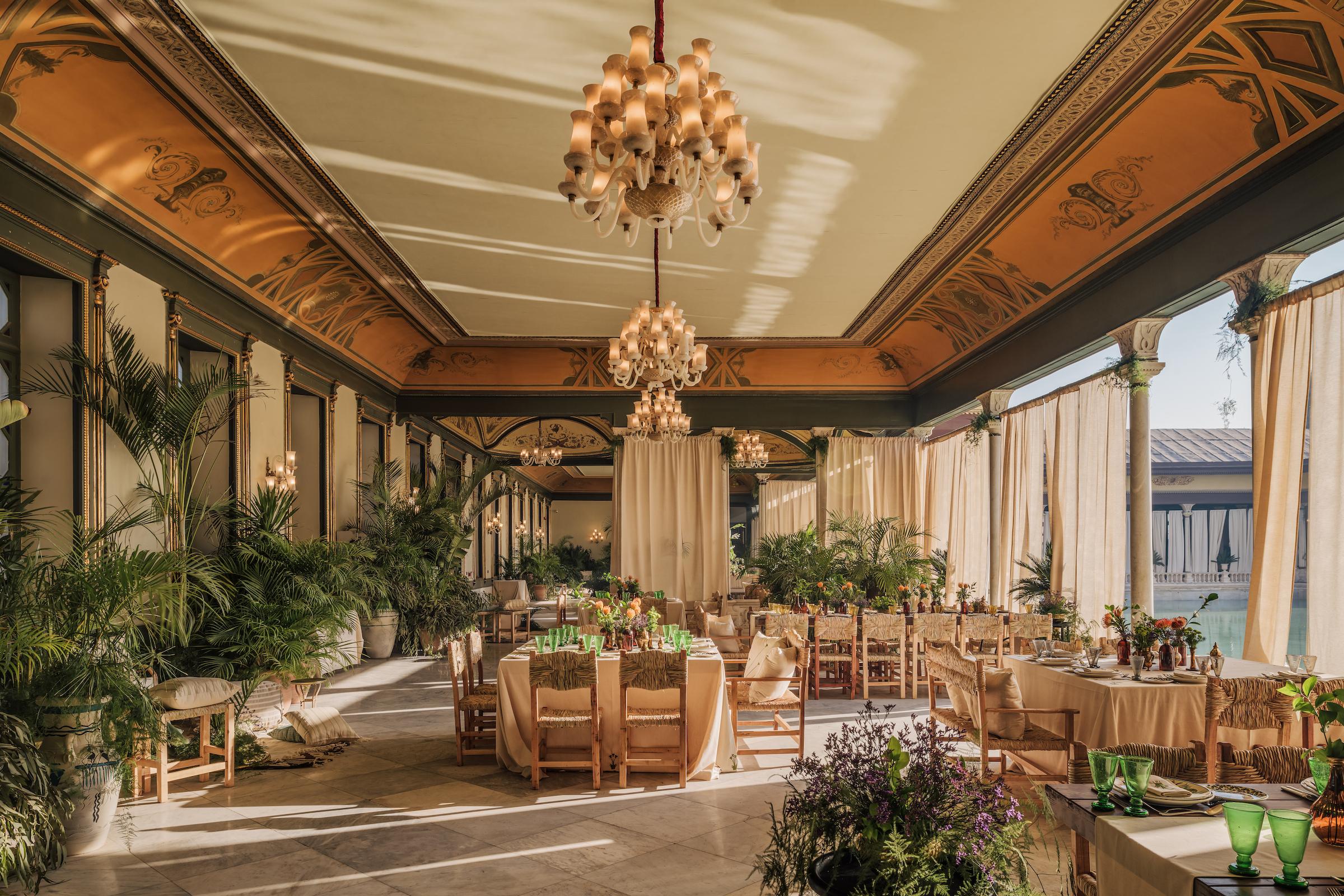
“The success of a project for me is whether it’s situated within the right context,” Iskander says. “It’s a thin line we need to balance and it’s an extremely sensitive task.”
This sensitivity comes from finding a point at which the event feels intentional without becoming intrusive. To position a commercial event within aloaded setting inevitably raises questions of how much the intervention should assert itself and how much it should step back to allow the setting to speak for itself.
In Aswan, this sensitivity had to operate across three radically different environments. A three-day wedding moved from the ethereal Philae Temple to the Wadi Kiki restaurant in the vibrant Nubia, and finally to Old Cataract’s historic 1902 restaurant and terrace. With a Saudi bride and Swiss groom, Iskander’s team developed a broader narrative for the wedding around a “meeting of civilizations”. Across the weekend, the spatial design of each venue possessed a visual language that communicated with its respective space.
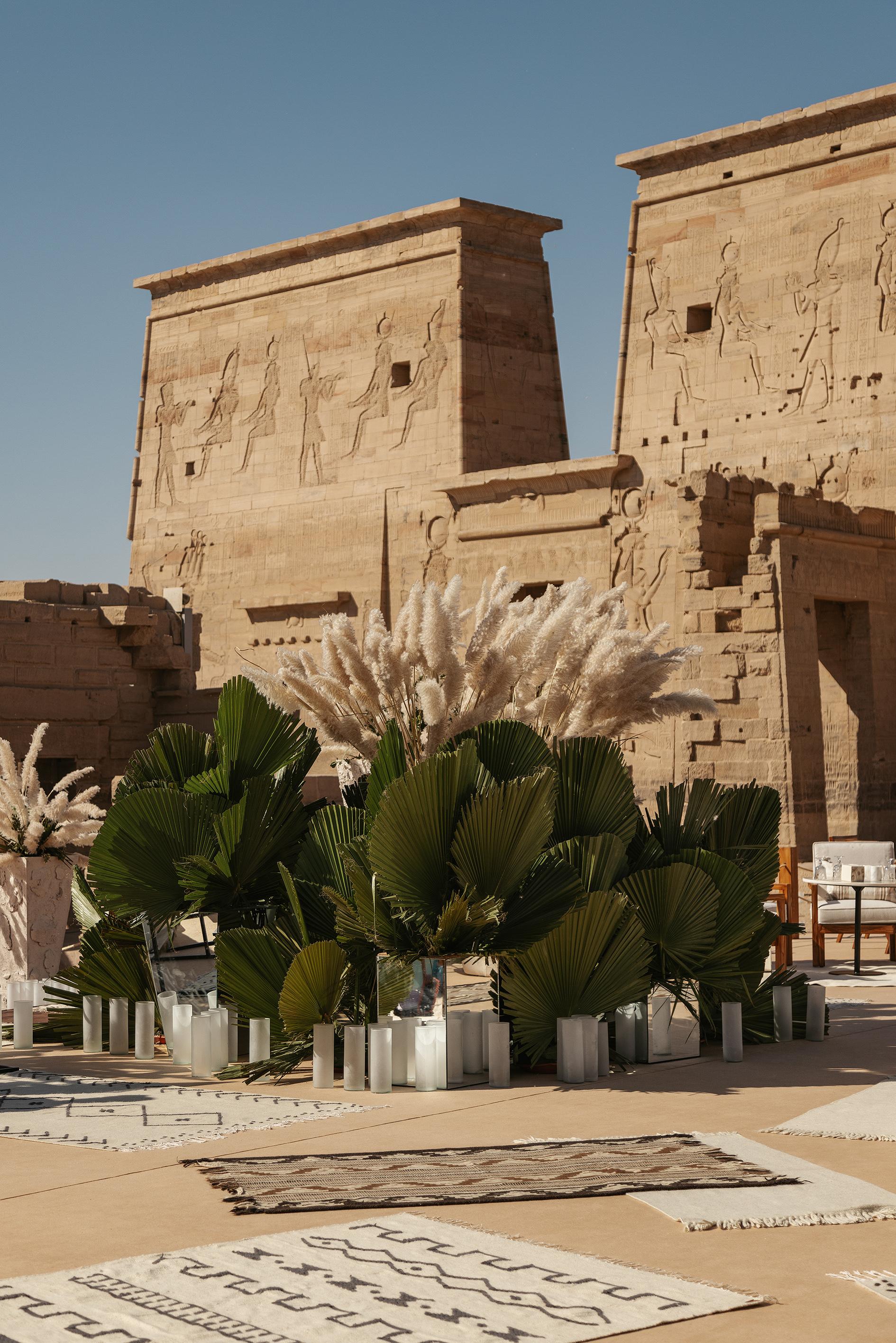
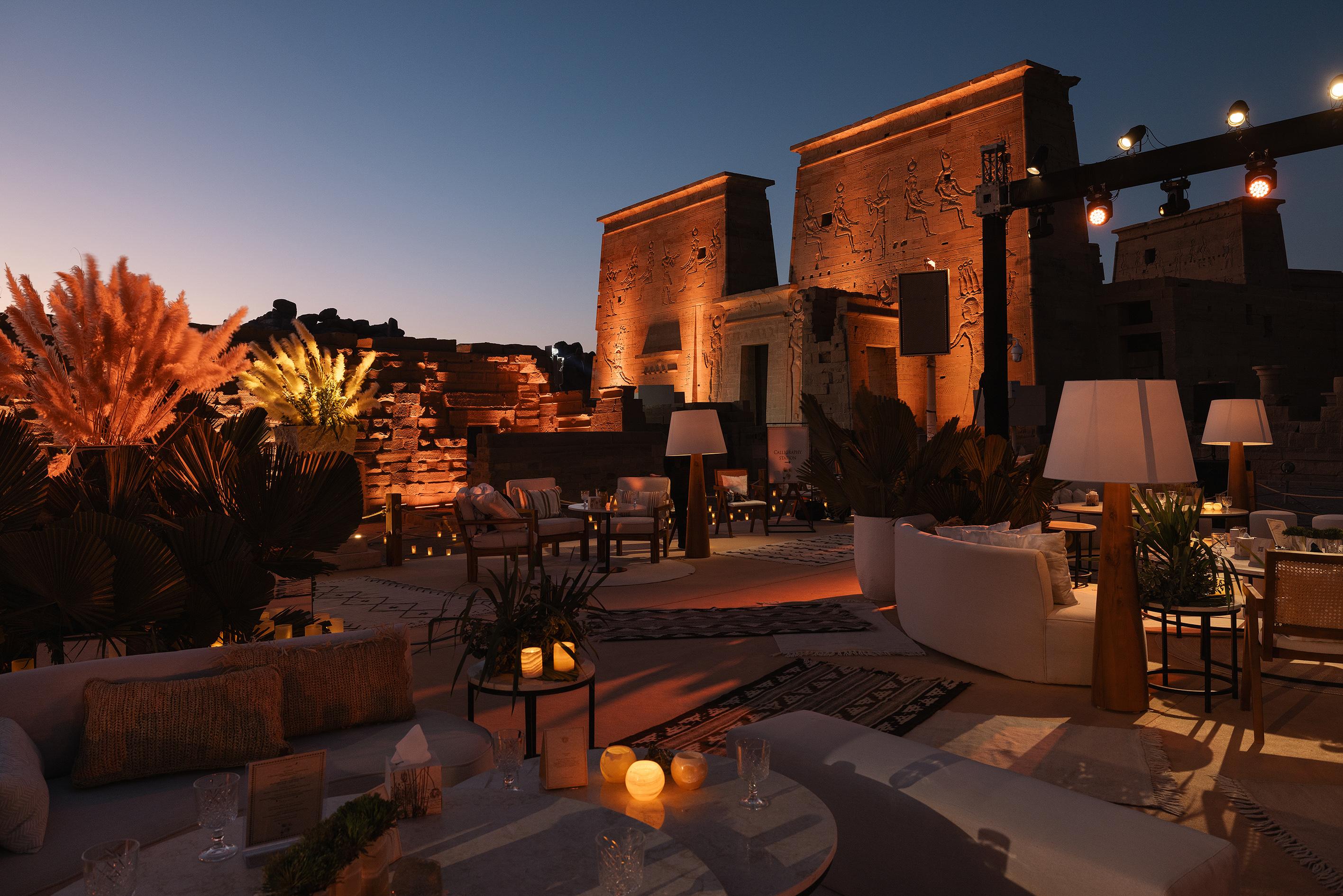
At Philae - a monumental ancient temple complex by the Nile built for the worship of Isis, goddess of fertility - Iskander drew from the temple’s sandstone architecture, monumental columns and intricate carved details in a setup that was deliberately subtle. Muted sand tones, reflective surfaces, and an abundance of candlelight echoed the warmth of the site and created a ceremonial atmosphere within the historic temple.
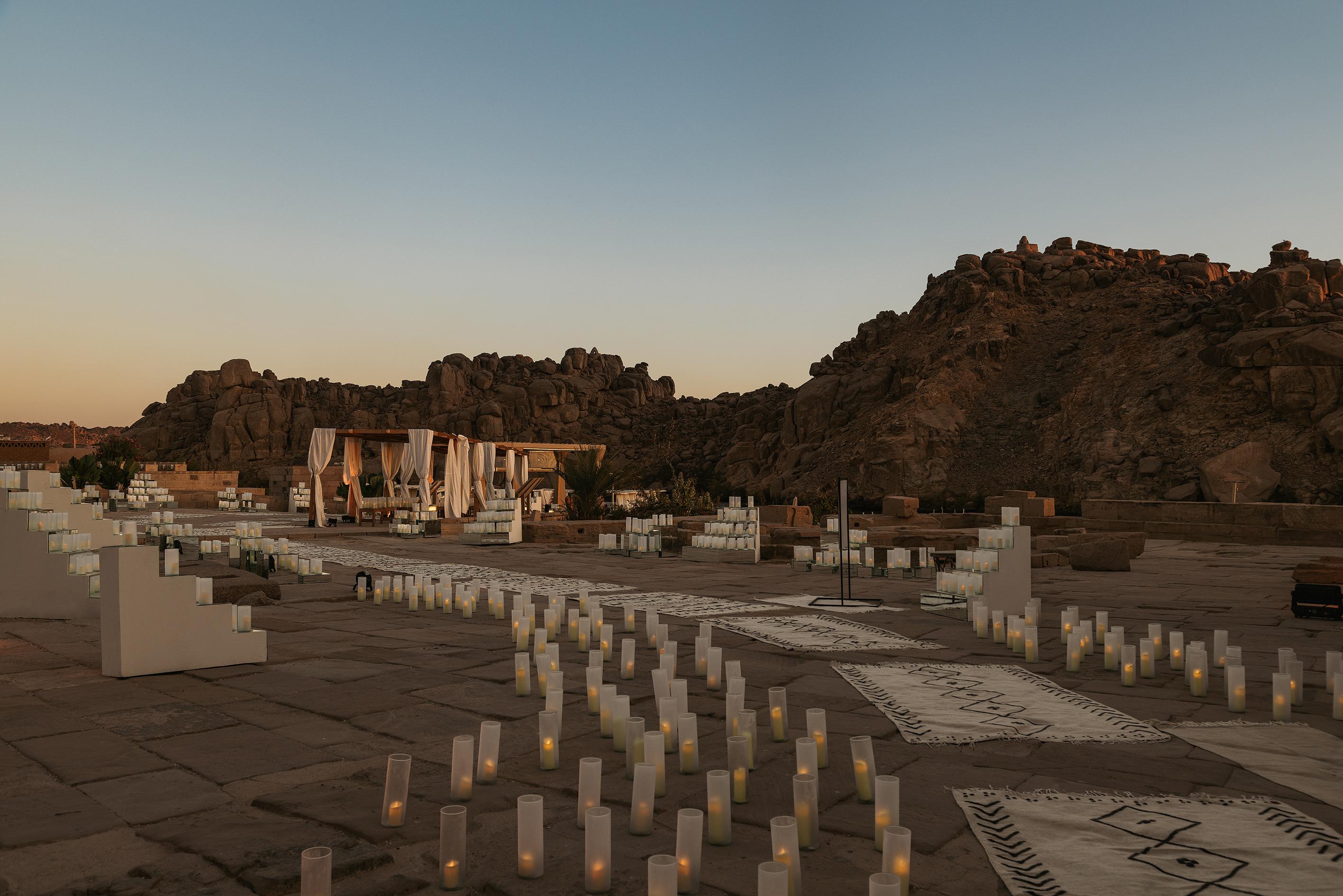
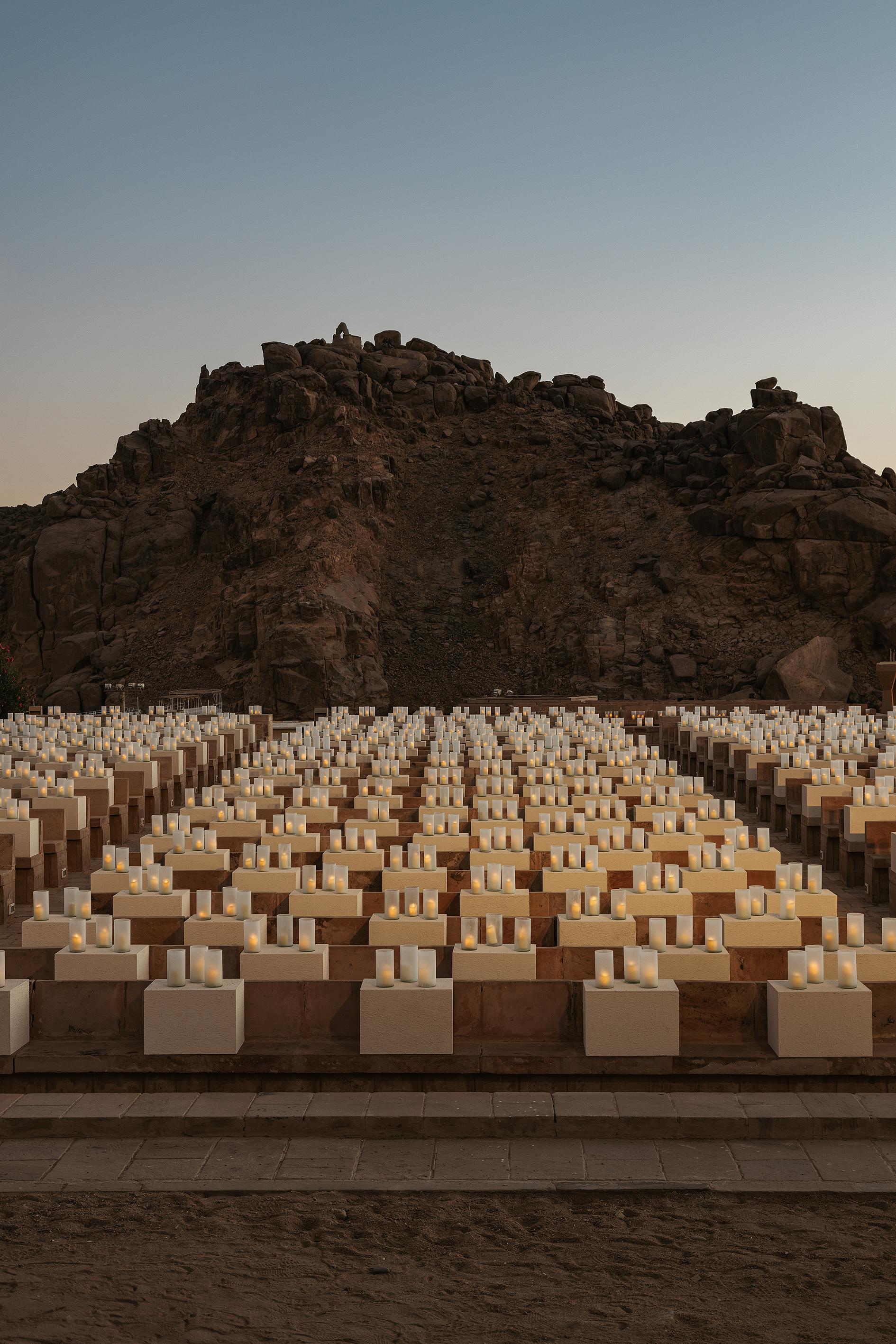
The papyrus symbol was a recurring conceptual motif, drawing from the setting’s visual language, and the broader narrative drew on Philae’s association with Isis, whose symbolism of new beginnings and unity resonated with the celebration.
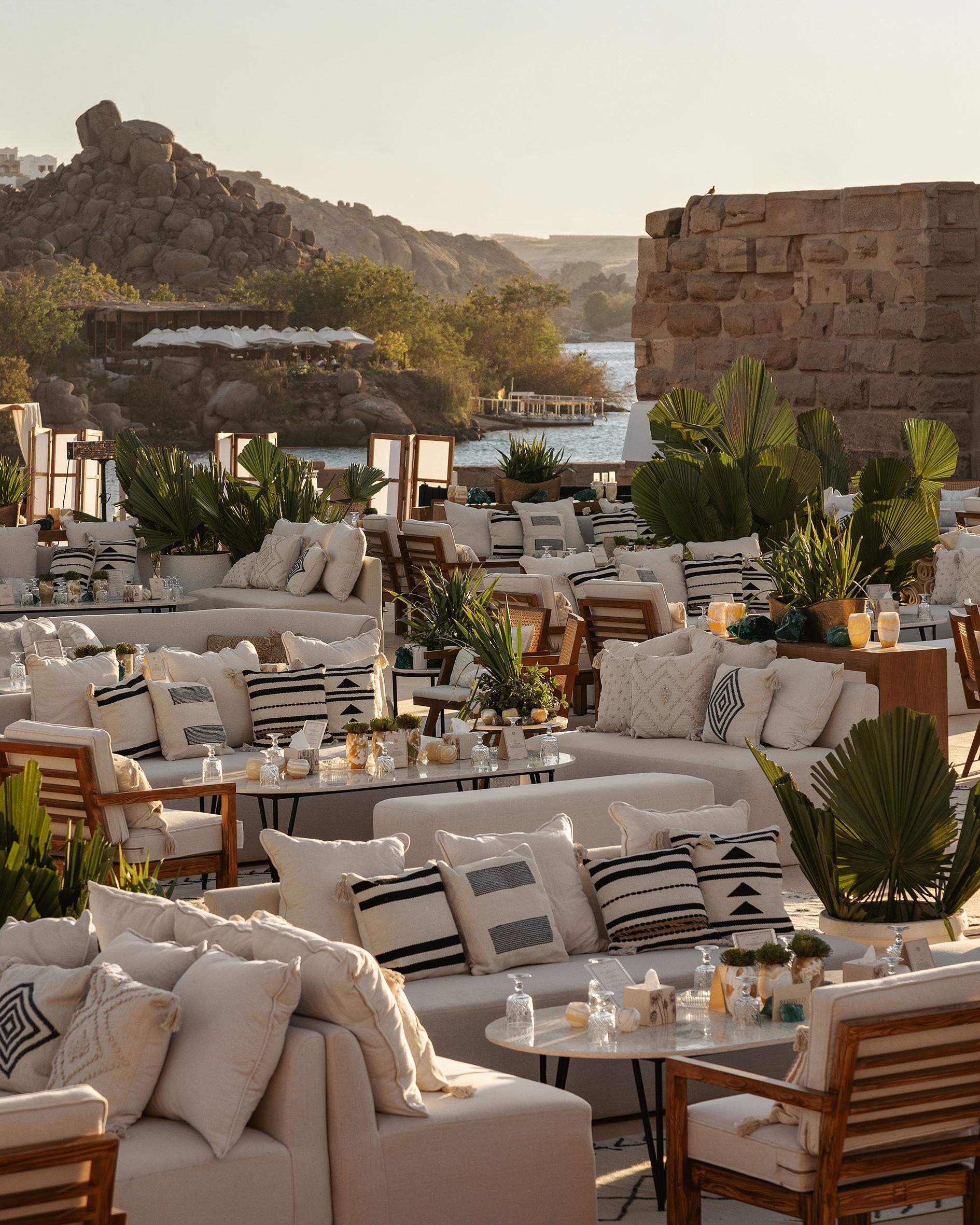
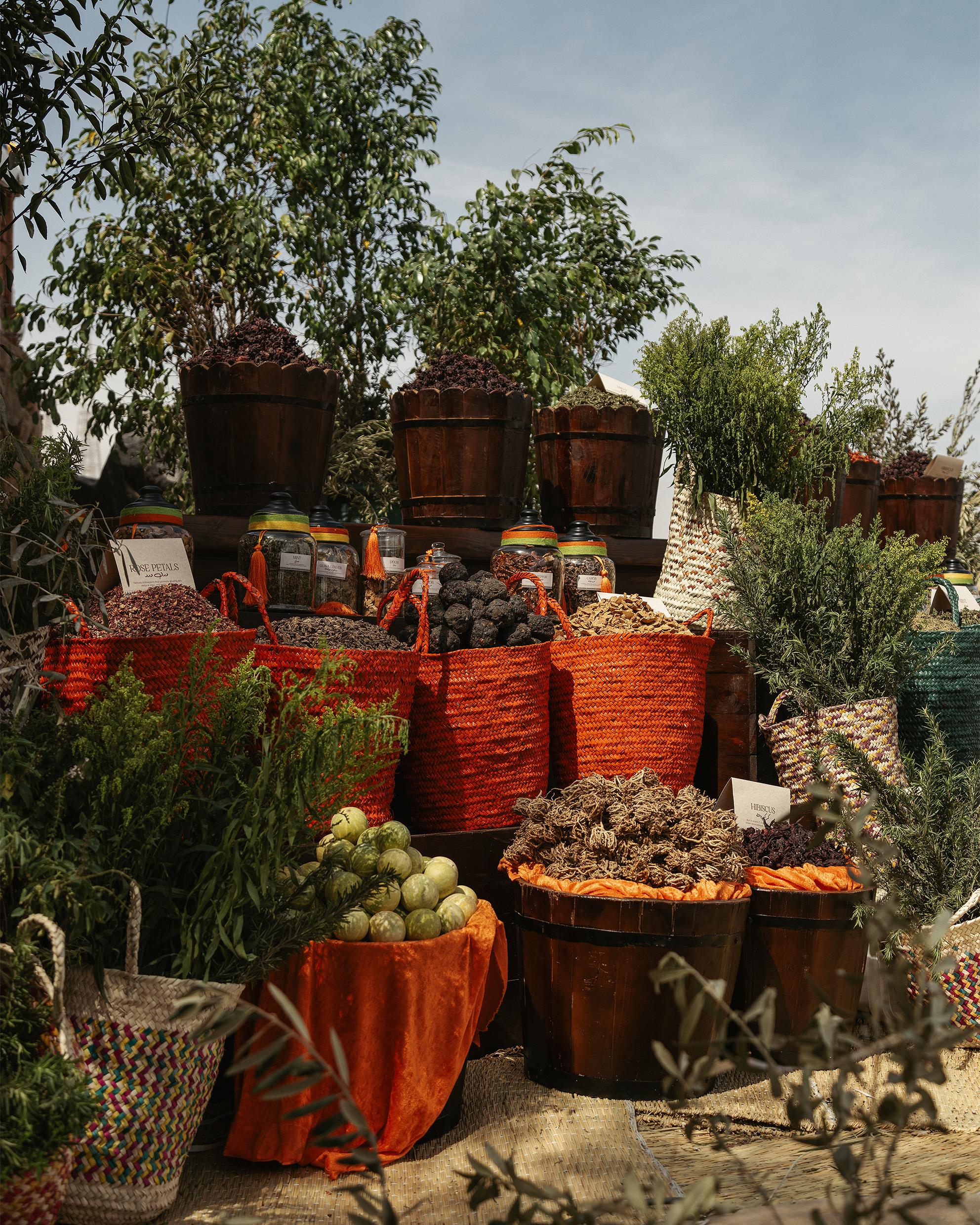
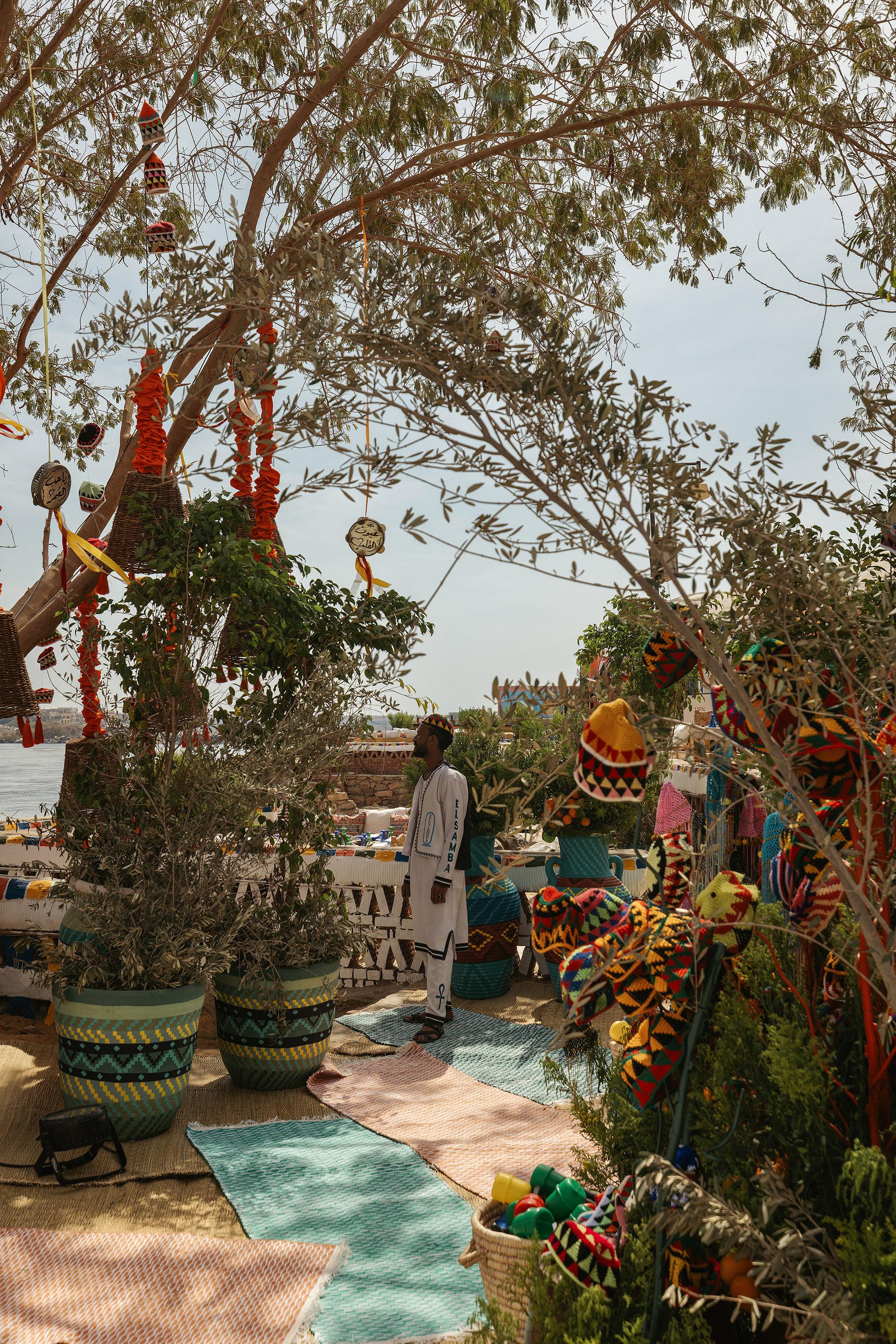
The following day featured an exuberant setting within Wadi Kiki, a vibrant restaurant in Nubia with gastronomy by the Four Seasons Nile Plaza: vibrant hues of amber and turquoise were drawn from the restaurant’s surrounding architecture, floor seating referenced Nubian gathering traditions, and custom made tajines became part of the lunch’s experience.
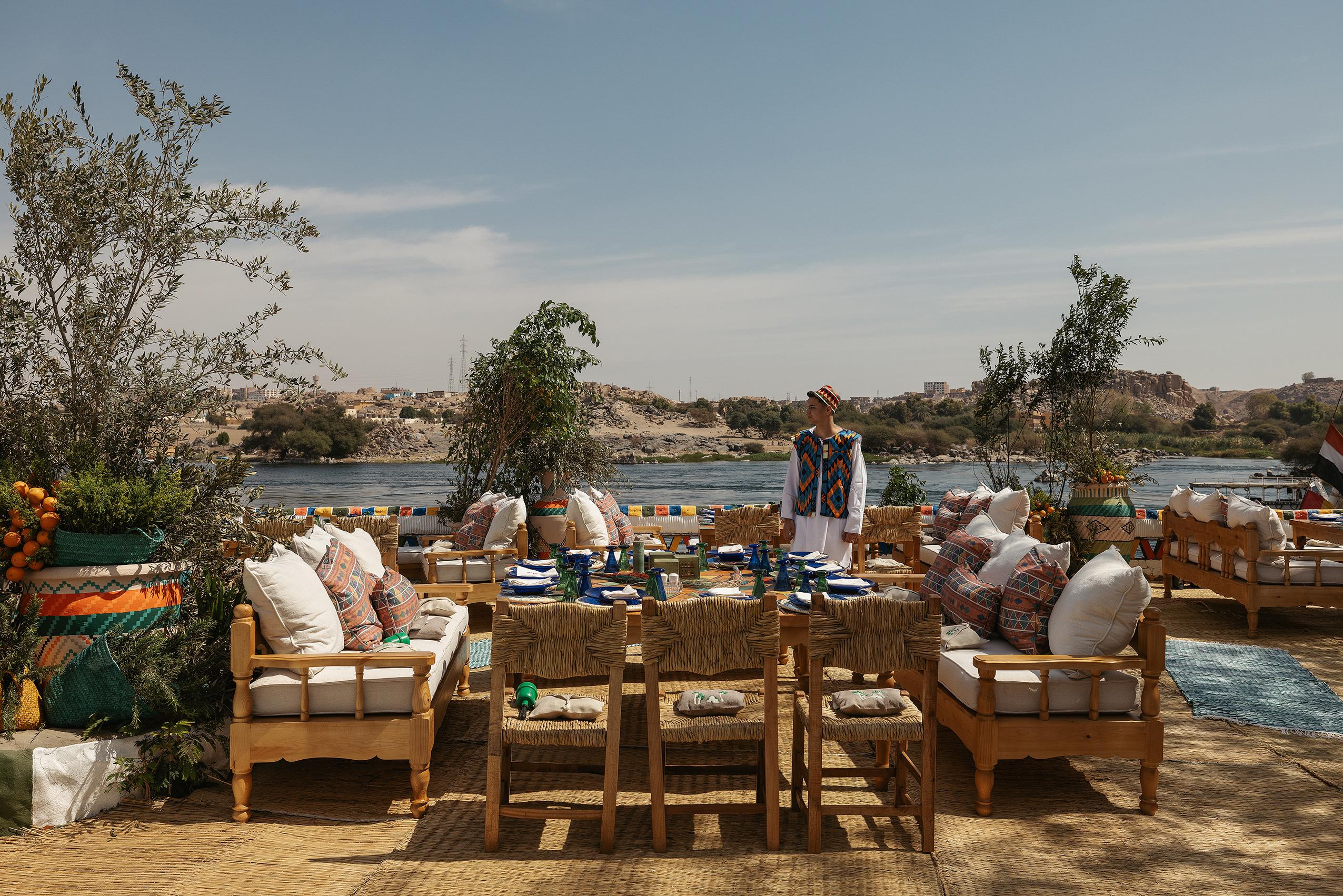
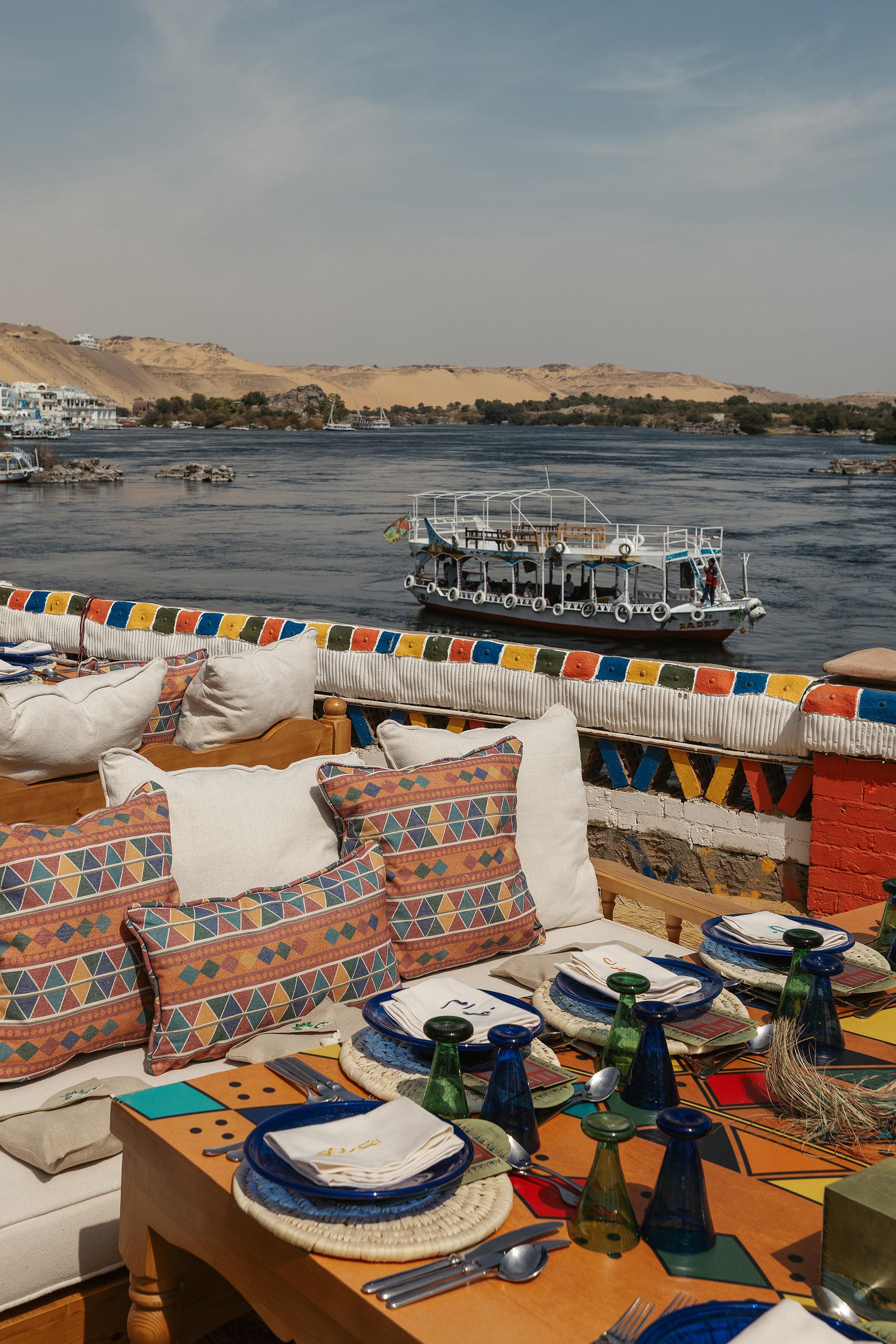
Music, food, crafts and the boats transporting guests became an extension of the setting. Local production was equally important to Iskander, as with the rest of her projects, where she sourced perfumery, scent, and costumes from Nubia and worked with local suppliers from Cairo for the wedding’s decorative elements.
By the final evening, the wedding took place at the Old Cataract, whose history and architecture carries a particular grandeur. Built in 1899, the hotel became one of Egypt’s most iconic hotels, welcoming royalty, politicians, writers and travelers over the 20th century.
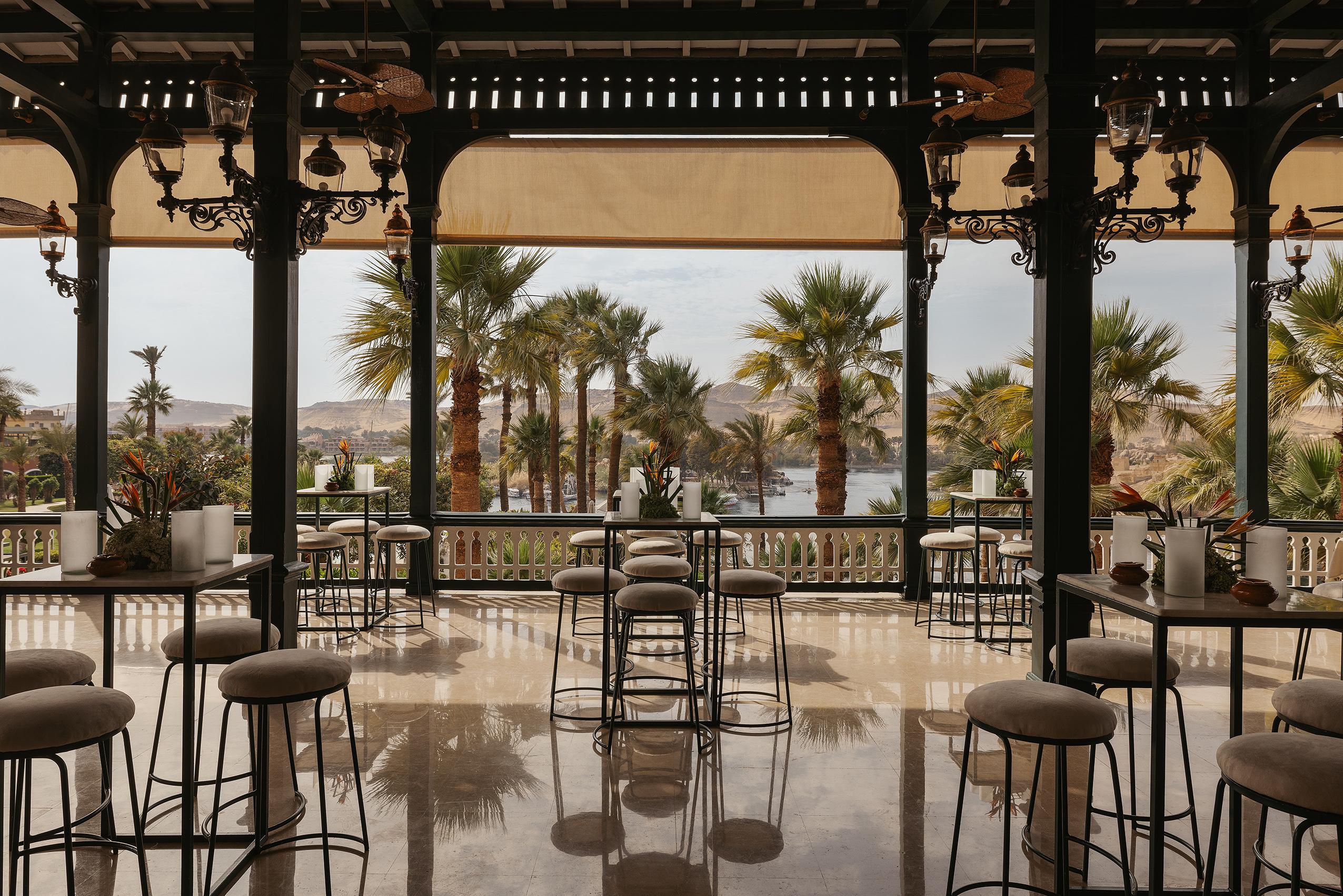
Its architecture and interiors, with an eclectic visual language, carries the European architectural and design influences of hospitality projects from early 20th century Egypt. In the grand 1902 restaurant, Iskander used a richer formal treatment: deeper maroon upholstery, darker tones, arabesque references, and rich decorative details spoke to the hall’s existing character.
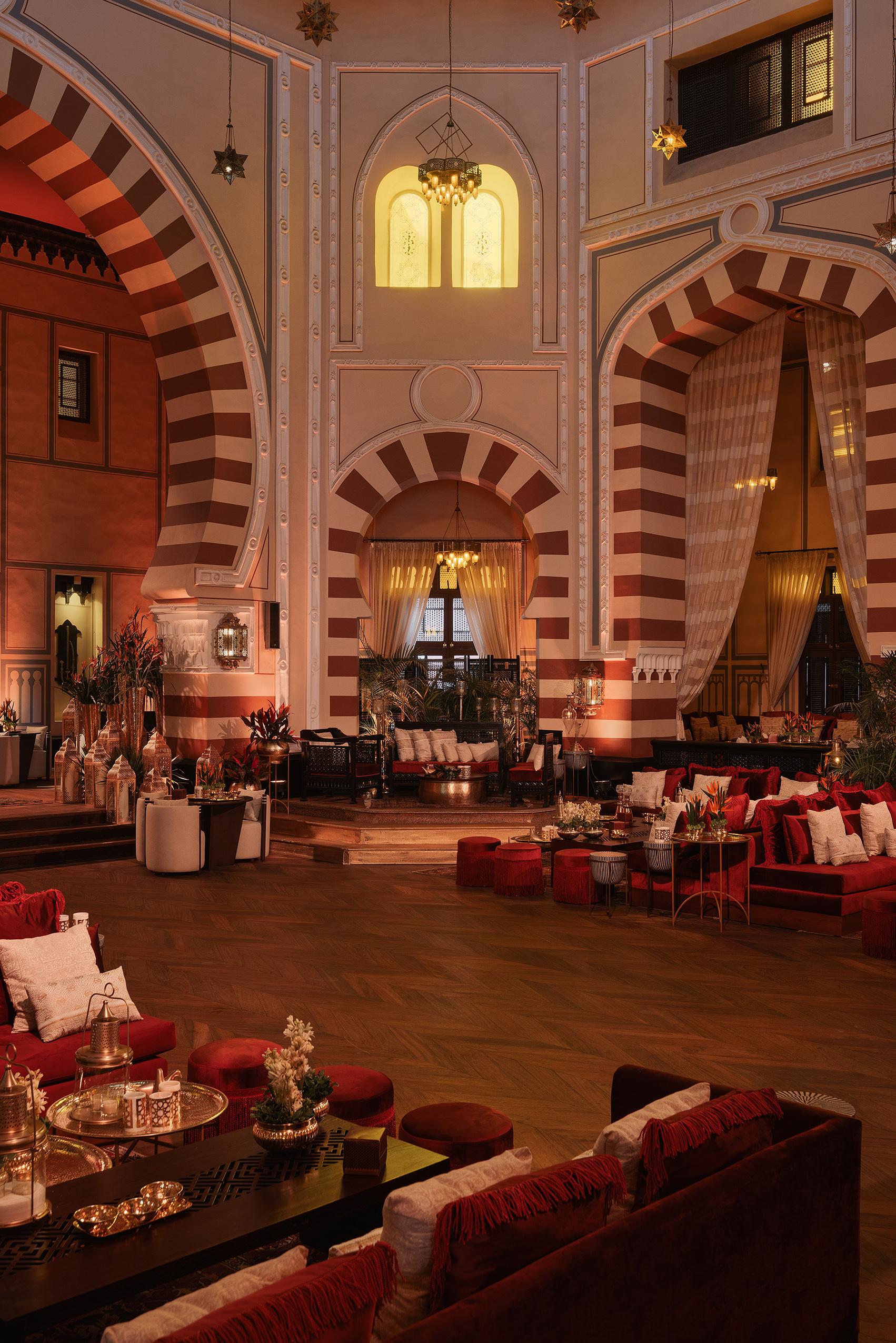
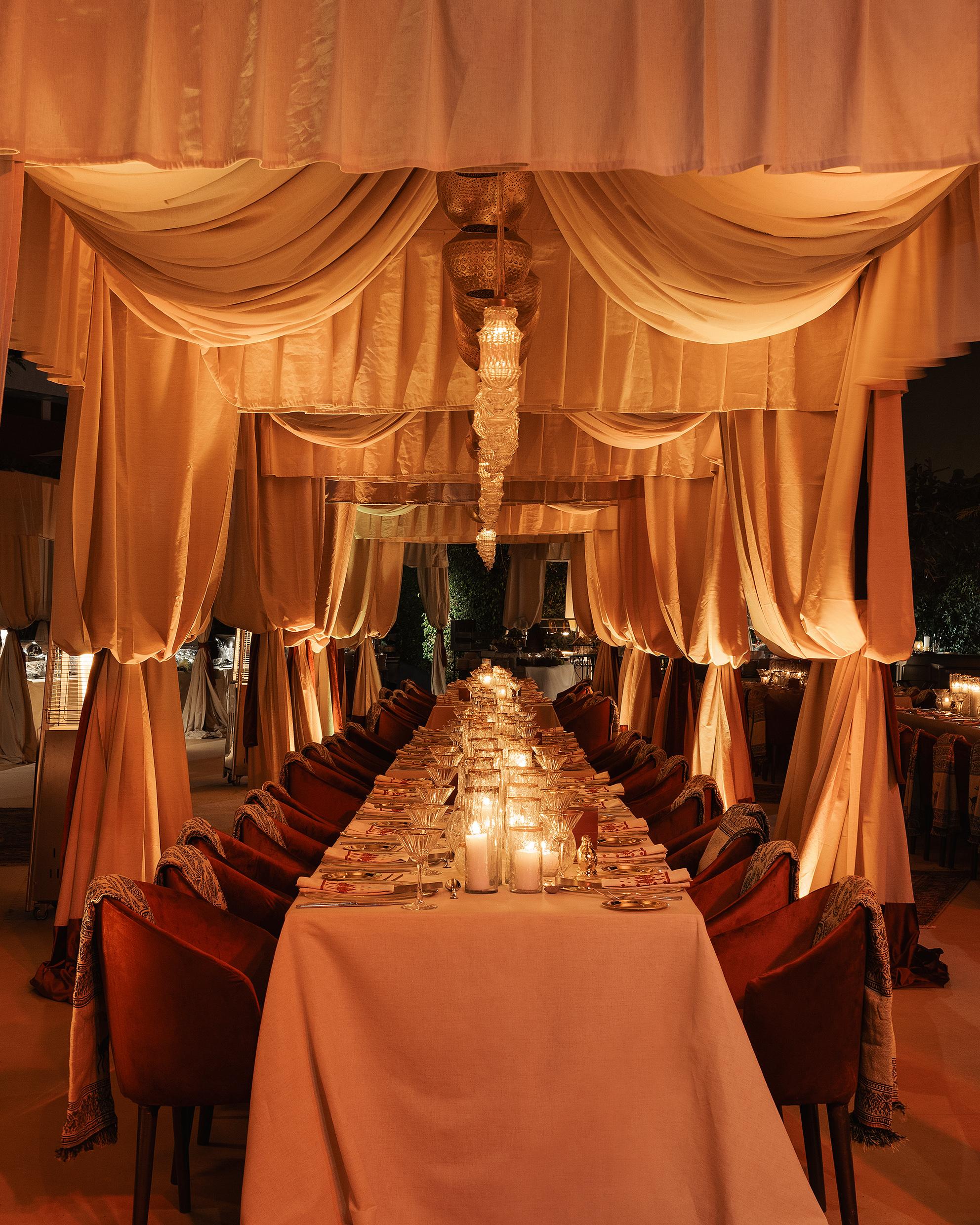
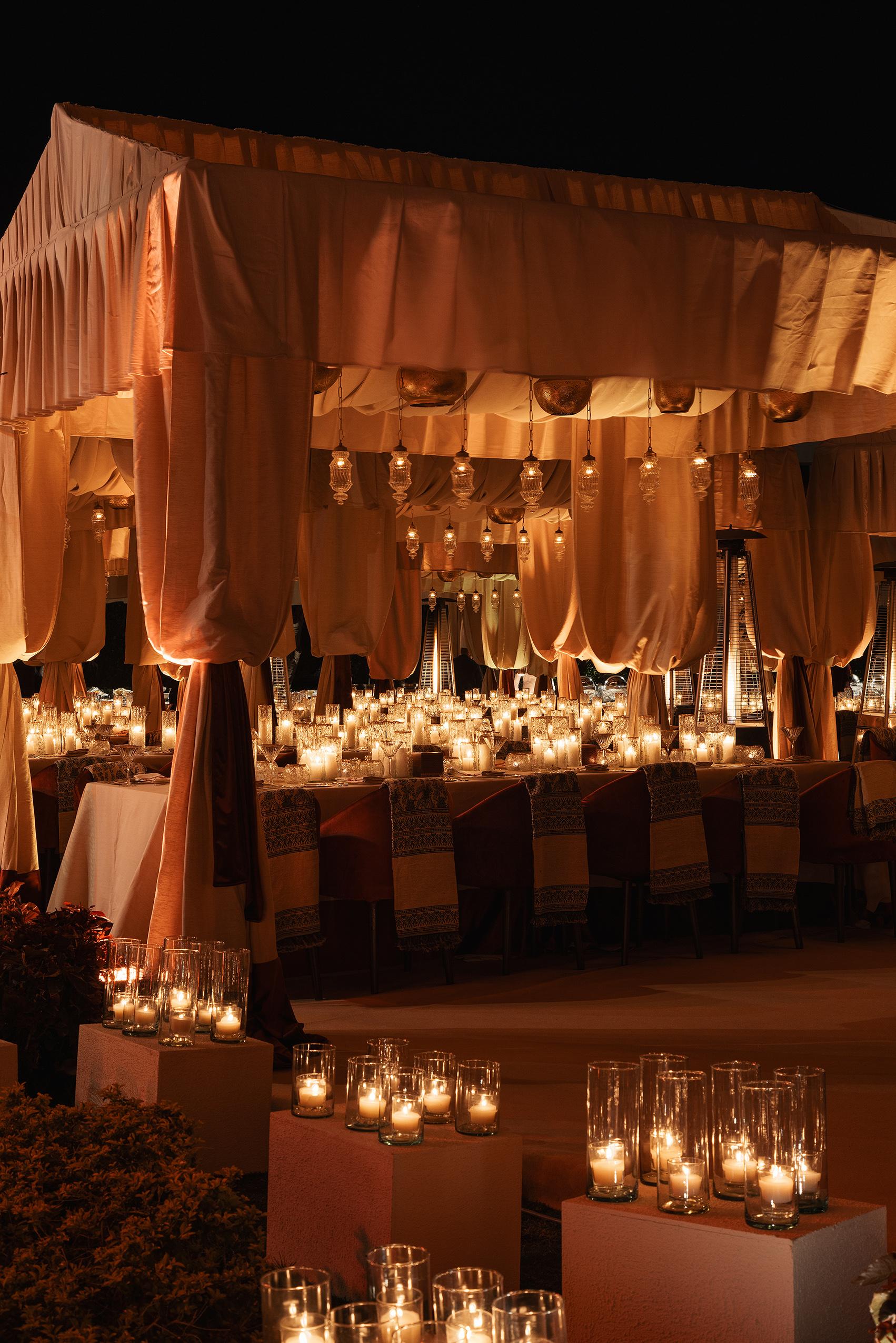
Across the three spaces, the guest experience was designed as one continuous journey while still allowing for each space to speak for itself. Anchoring elements could appear throughout the weekend - embroidered napkins, tailored menus, transport boats, and handwritten notes - but their visual treatment shifted according to the qualities of each site.
For Iskander, this attention to detail is a definitive quality of her work. As the designer puts it, “we have to blend with the space and feel like the event is part of it.” Across both the Dior lunch and the Aswan wedding, her approach is less about using a historic setting as a backdrop and more about engaging with its qualities. For Iskander, this means understanding what a space can give you while paying just as much attention to what it does not need.